



Introduction
What is marketing of services? In today’s digital and competitive business world, services play a major role in driving business growth. Unlike physical products, services are intangible, which means they cannot be touched or stored. Because of this, businesses need effective strategies to promote and sell their services.
Understanding what is marketing of services is essential for business owners, marketers, and entrepreneurs who want to attract customers and build long-term relationships. Service marketing focuses on delivering value, building trust, and ensuring customer satisfaction.
If you want to grow your business using proven strategies, you can explore our Digital Marketing Services Page to understand how professional marketing can help you achieve better results.
What is Marketing of Services?
What is marketing of services refers to the process of promoting, selling, and delivering services to customers. It includes strategies that help businesses communicate the value of their services and build trust with their audience.
Since services are intangible, customers cannot evaluate them before purchase. That is why businesses must focus on building credibility through content, reviews, and customer experience.
Examples of services include:
- Digital marketing services
- Healthcare services
- Education and training
- Business consulting
All these industries depend on marketing of services to attract and retain customers.
Key Characteristics of Marketing of Services
To fully understand what is marketing of services, it is important to know the core characteristics that make services different from physical products. These characteristics define how services are delivered, experienced, and evaluated by customers, and they also influence marketing strategies. Since services are intangible and experience-based, businesses must focus more on customer satisfaction, trust-building, and consistency in service delivery. Unlike products, services cannot be owned, only experienced, which makes customer perception extremely important. Understanding these characteristics helps companies design better marketing strategies, improve service quality, and build long-term relationships with their customers.
Intangibility
One of the main characteristics of what is marketing of services is intangibility, which means services cannot be seen, touched, or physically examined before purchase. Customers cannot evaluate the quality of a service in advance, which makes trust and brand reputation very important in decision-making. For example, services like digital marketing, consulting, or education are based on performance and outcomes rather than physical features. Because of this, businesses must rely on testimonials, case studies, online reviews, and strong branding to build confidence among customers. Providing clear communication, showcasing past results, and offering guarantees or free consultations can also help reduce uncertainty and improve customer trust.
Inseparability
Inseparability means that services are produced and consumed at the same time. In what is marketing of services, the service provider is directly involved in delivering the service, and customer interaction becomes a key factor in the overall experience. For example, a teacher conducting an online class or a consultant giving advice is an essential part of the service itself. This makes it important for businesses to focus on communication, professionalism, and real-time interaction. Well-trained employees, polite behavior, and effective communication skills can significantly improve customer satisfaction and create a positive impression, leading to repeat business and referrals.
Variability
Variability refers to the inconsistency in service quality. In what is marketing of services, services can vary depending on who provides them, when they are delivered, and under what conditions. For instance, two employees may provide slightly different experiences for the same service, which can affect customer satisfaction. This makes it essential for businesses to standardize their processes, implement proper training programs, and maintain strict quality control systems. By ensuring consistency in service delivery, businesses can build trust, improve customer experience, and maintain a strong brand reputation in the market.
Perishability
Perishability means that services cannot be stored for future use. In what is marketing of services, if a service is not used at a specific time, it is lost forever. For example, an empty hotel room, unused airline seat, or unbooked appointment slot cannot be sold later. This creates challenges in managing demand and supply effectively. Businesses must use strategies such as advance bookings, discounts during low demand, and proper scheduling to maximize utilization. Efficient demand management helps reduce losses and ensures better profitability.
Importance of Marketing of Services
Understanding what is marketing of services helps businesses grow and compete effectively in the modern market. Service marketing plays a key role in attracting customers, building trust, and increasing revenue. Since services are intangible, businesses must focus more on communication, branding, and customer experience to succeed. A strong marketing strategy ensures that customers understand the value of the service and choose it over competitors.
Builds Brand Awareness
Service marketing helps businesses increase visibility and reach a wider audience. By using digital marketing strategies like SEO, social media, and content marketing, companies can promote their services effectively and build a strong brand presence. A strong brand image makes it easier for customers to recognize and trust a business when they need a service. Consistent branding and messaging across platforms also improve credibility and customer recall.
Builds Customer Trust
Since services cannot be physically tested, trust becomes a major factor in customer decisions. Businesses must focus on reviews, testimonials, ratings, and consistent service quality to build credibility. Providing transparent communication, clear pricing, and delivering promised results helps in building long-term relationships with customers. Trust not only increases conversions but also improves customer retention and referrals.
Drives Business Growth
Effective service marketing helps generate leads, improve conversions, and increase overall revenue. Businesses that understand what is marketing of services can attract more customers and expand their reach in the market. Continuous marketing efforts, combined with quality service delivery, help companies grow faster and achieve long-term success. It also helps in scaling operations and entering new markets.
Creates Competitive Advantage
Strong marketing strategies help businesses stand out from competitors. Companies that provide better service experience, strong branding, and effective communication gain a long-term advantage. A unique value proposition and consistent quality help businesses differentiate themselves and build a loyal customer base.
7Ps of Marketing of Services
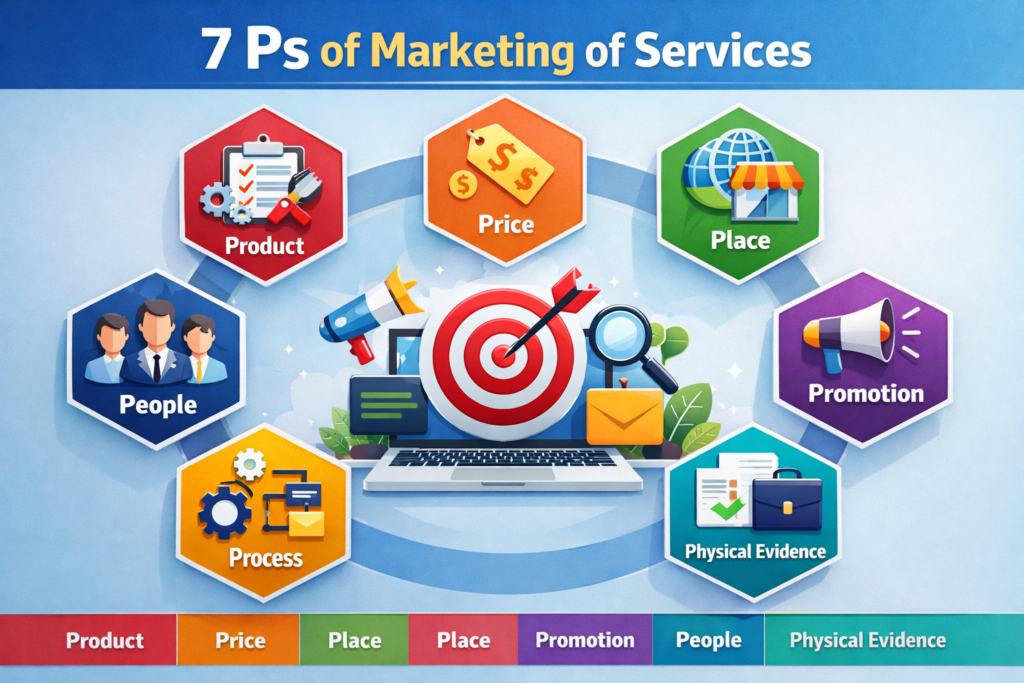
The 7Ps marketing mix is an essential concept in what is marketing of services, helping businesses deliver value and improve customer satisfaction. It provides a complete framework for planning and executing service marketing strategies effectively.
Product
In service marketing, the product refers to the service offered to customers. It focuses on solving problems and delivering value rather than physical goods. Businesses must clearly define their services, highlight their benefits, and ensure they meet customer needs effectively. A well-structured service offering improves customer satisfaction, builds trust, and enhances brand reputation.
Price
Price plays an important role in shaping customer perception. In what is marketing of services, customers often judge quality based on price, so businesses must use the right pricing strategy to balance value and affordability. Offering flexible pricing, service packages, and discounts can also help attract more customers and improve conversions.
Place
Place refers to how and where the service is delivered. It can be through online platforms, physical locations, or both. Easy accessibility and convenience improve customer experience and increase satisfaction. Businesses must ensure that their services are available on platforms where their target audience is most active.
Promotion
Promotion includes all marketing activities used to advertise services. SEO, social media marketing, and content marketing help businesses reach their target audience and generate leads. Consistent promotion helps build brand awareness, improve engagement, and attract potential customers over time.
People
People are a crucial part of service delivery. Employees interact directly with customers, and their behavior, communication, and skills impact the overall experience. Proper training, professionalism, and a customer-focused approach help improve service quality and customer satisfaction.
Process
Process refers to the workflow used to deliver services efficiently. A well-structured process ensures smooth service delivery, reduces errors, and maintains consistency in quality. It also helps businesses save time and improve operational efficiency.
Physical Evidence
Physical evidence includes visible elements like websites, reviews, testimonials, branding, and office environment that help customers evaluate service quality. Since services are intangible, these elements play a key role in building trust and influencing customer decisions.
Examples of Marketing of Services
Many industries apply what is marketing of services to promote their offerings and attract customers. Service marketing helps businesses communicate their value clearly and effectively.
Digital Marketing Agencies
They promote services like SEO, social media marketing, and advertising to help businesses grow online. These agencies focus on performance, analytics, and measurable results to attract and retain clients.
Healthcare Industry
Hospitals and clinics use marketing to attract patients by building trust, showcasing expertise, and highlighting quality care. Reputation and patient experience play a major role in this sector.
Education Industry
Online courses and coaching institutes use marketing strategies to attract students. They focus on delivering value, knowledge, and career growth opportunities.
Real Estate
Consultants promote advisory services for buying and selling properties. Trust, experience, and market knowledge are key factors in influencing customer decisions.
Best Strategies for Marketing of Services
To succeed in what is marketing of services, businesses must use effective marketing strategies that help them reach the right audience and build strong relationships.
Search Engine Optimization (SEO)
SEO helps websites rank higher on search engines and attract organic traffic. It is one of the most effective strategies for promoting services, increasing visibility, and generating high-quality leads over time.
Content Marketing
Creating valuable and informative content helps businesses educate customers, build authority, and increase trust. High-quality content also improves engagement and boosts search engine rankings.
Social Media Marketing
Social media platforms help businesses connect with their audience, promote services, and increase engagement. Regular posting, interaction, and content sharing help build strong relationships and improve brand awareness.
Conclusion
Now you clearly understand what is marketing of services and why it is important for modern businesses. Since services are intangible, companies must focus on trust, customer experience, and effective marketing strategies.
By using SEO, content marketing, and social media, businesses can successfully promote their services and attract more customers.
The goal of service marketing is not just to sell services but to provide value and build long-term relationships with customers.